Saturday, June 29, 2019
Google Maps Leads About 100 Drivers Into A 'Muddy Mess' In Colorado
Many of us use car navigation systems these days, and we developed some trust working with these systems over time.
Here is what can happen when we have too much trust - Google Maps Leads About 100 Drivers Into A 'Muddy Mess' In Colorado.
Now imagine how this type of incident would develop in the world of automation in healthcare.
Saturday, March 30, 2019
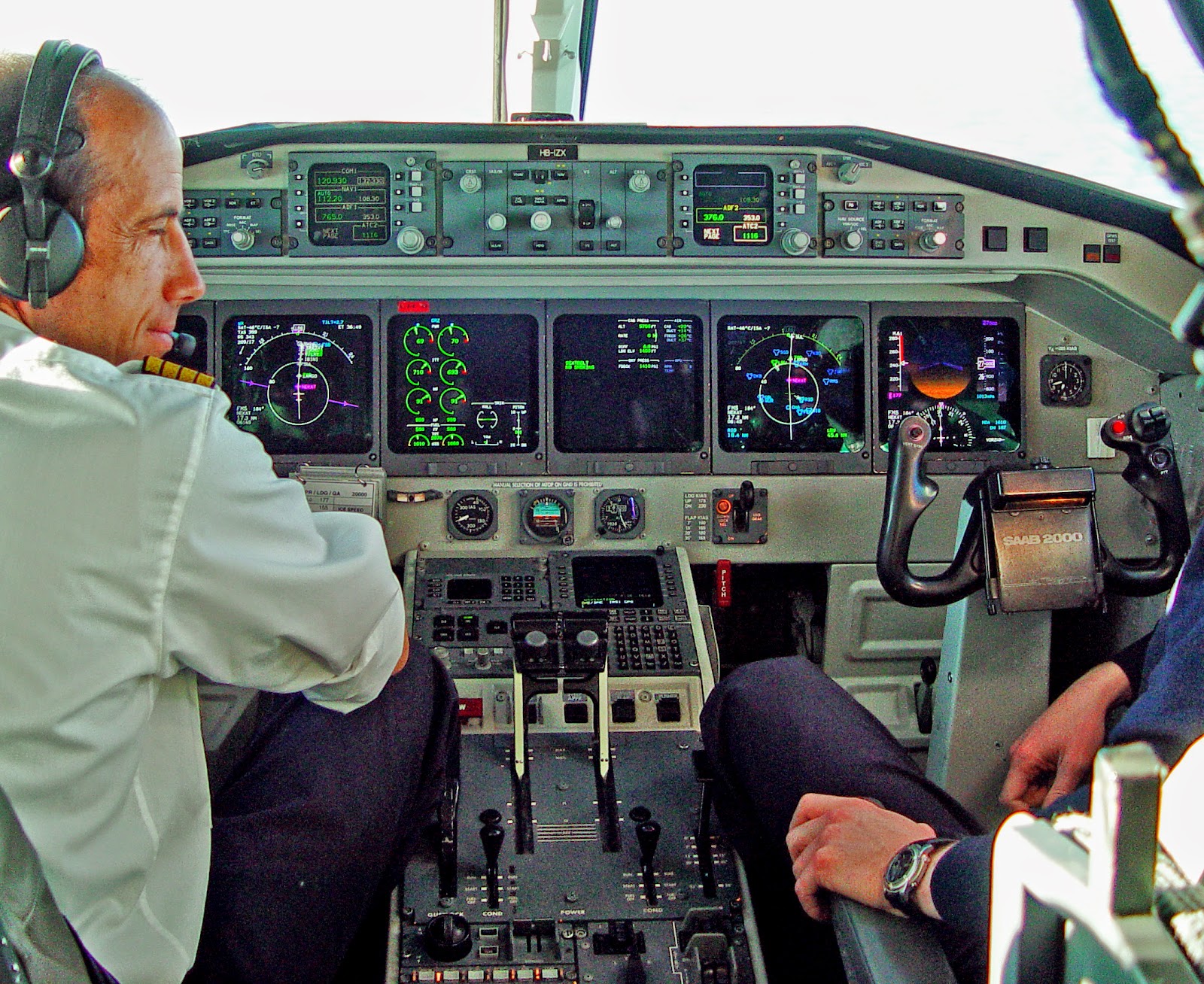
Learning from Autopilot Problems
What can the healthcare industry learn from the risks introduced by the rise of increasingly automated airplanes?
Wednesday, March 20, 2019
It's all about communication
How one doctor is changing patient safety around the world by improving communication in the operating theater.
Willing to let others know you're human to improve #patientsafety?https://t.co/oCHmeUgExn #knowyourhuman pic.twitter.com/1bpSy2m91E— Rob Hackett (@patientsafe3) December 4, 2017
Monday, February 25, 2019
Monitor Alarm are still in the ECRI Institute top 10 health technology hazards
The ECRI Institute published its 2019 top 10 health technology hazards, and physiologic monitor alarm are still on this list.
Friday, July 14, 2017
The ECRI published its top 10 patient safety concerns for 2017
The ECRI published its top 10 patient safety concerns for 2017.
Although it is not mentioned in this report, human factors tools and methods can improve most of these patient safety concerns.
Thursday, January 5, 2017
Automation is identified as one of the top 10 health technology hazards for the first time
The ECRI Institute have published its Top 10 Health Technology Hazards for 2017, and Automation is identified as one of the top 10 technology hazards for the first time.
Wednesday, October 12, 2016
Safety improvements doesn't need to cost much
“The Dutch Reach is a practice where instead of using your near hand — usually the driver’s left hand — to open your car door, you use your far hand. Your right hand. In doing that, you automatically swivel your body. And you position your head and shoulders so you are looking directly out. First, past the rear-view mirror. And then, you are very easily able to look back and see if there are oncoming bicycles or cars or whatever.”
http://99percentinvisible.org/article/dutch-reach-clever-workaround-keep-cyclists-getting-doored/
Saturday, April 2, 2016
Clinical Human Factors Group has published their Common Terms in Human Factors
Clinical Human Factors Group has published their Common Terms in Human Factors.
This is a 26 pages interactive catalog, written by Christine Ives and Steve Hillier.
The catalog brings not only the explanation but also examples for common terms.
You can find the document (pdf file) here.
This is a 26 pages interactive catalog, written by Christine Ives and Steve Hillier.
The catalog brings not only the explanation but also examples for common terms.
You can find the document (pdf file) here.
Monday, June 29, 2015
Sunday, February 15, 2015
Cars' Black Box
The circumstance that led to more than 13 deaths linked to General Motors ignition switch defect will not be discussed in this post. However I would like to highlight the important part that the so called "black box" played in the investigation of these cases.
The interaction between a complex technology and a human operator raise the need for an external, objective, source of information that can shed some light on what exactly happen during this interaction. Our default assumption that the technology part of the system was operating as expected and that the human operator is prone for error, need a reliable source of information that will tell us what actually happen. Now we just have to make sure that the 'black box" capture all the information that we need in order to understand what happened.
Monday, July 7, 2014
What Can Happen When Operators Rely Too Much on Automation?
I already referred to the danger in relying on automation. The Asiana Airlines Boeing 777 passenger jet, that crashed while landing at San Francisco International Airport on July 2013, is a good example for what can go wrong when operators rely on automation.
In a June 24 press release said NTSB acting chairman Christopher A. Hart: "In this accident, the flight crew over-relied on automated systems without fully understanding how they interacted. Automation has made aviation safer. But even in highly automated aircraft, the human must be the boss.".
This lesson must be learned before we start implementing automation in healthcare.
In a June 24 press release said NTSB acting chairman Christopher A. Hart: "In this accident, the flight crew over-relied on automated systems without fully understanding how they interacted. Automation has made aviation safer. But even in highly automated aircraft, the human must be the boss.".
This lesson must be learned before we start implementing automation in healthcare.
Sunday, June 22, 2014
Alarms in healthcare - not much has changed
The conclusions of this 2014 study - "Since 2005–2006 when the first survey was conducted, not much has changed. False alarms continue to contribute to a noisy hospital environment, and sentinel events related to alarm fatigue persist. Alarm hazards are a significant patient safety issue."
Monday, June 16, 2014
Wearable Technology - Is this the future user interface for clinicians?
Philips built proof of concept that transfer patient vital signs into Google Glass.
That's an interesting use case for wearable technology, and once the integration will be reliable this might be the future user interface for clinicians.
(image source: Philips.com)
Sunday, June 8, 2014
FDA launches openFDA
The FDA launches openFDA - an open interface designed to make it easier to access large, public health datasets collected by the agency. (You can find an example of a report generated by this interface here).
While having publicly available datasets of adverse events is always a good idea, one need also to think about the known issues of under-reporting in healthcare. There are many good reasons why the healthcare system suffers from under-reporting, and when we analyse this data we always have to ask ourselves - what can we learn from the tip of the iceberg.
Sunday, May 25, 2014
Switching to manual mode
When the air traffic controllers' system in southwestern United States went out on April 30, 2014, the operators at the regional center had to switched to a back-up system so they could see the planes on their screens. "Paper slips and telephones were used to relay information about planes to other control centers."
This is a good example for the human operator role in complex systems - improvising and taking control when the technology part of the system fail. This also demonstrate how important it is to maintain the operators' skills to run the system without the technology that support them during normal operation.
This lesson should be learned when we implement new technologies and automation in healthcare.
(image source: http://en.wikipedia.org/wiki/File:Air_traffic_controller_schiphol_tower.jpg)
This is a good example for the human operator role in complex systems - improvising and taking control when the technology part of the system fail. This also demonstrate how important it is to maintain the operators' skills to run the system without the technology that support them during normal operation.
This lesson should be learned when we implement new technologies and automation in healthcare.
(image source: http://en.wikipedia.org/wiki/File:Air_traffic_controller_schiphol_tower.jpg)
Subscribe to:
Posts (Atom)